



Inside PGA Catalunya
By
Ahead of The European Tour’s Qualifying School Final Stage, europeantour.com looks inside stunning host venue PGA Catalunya Resort…
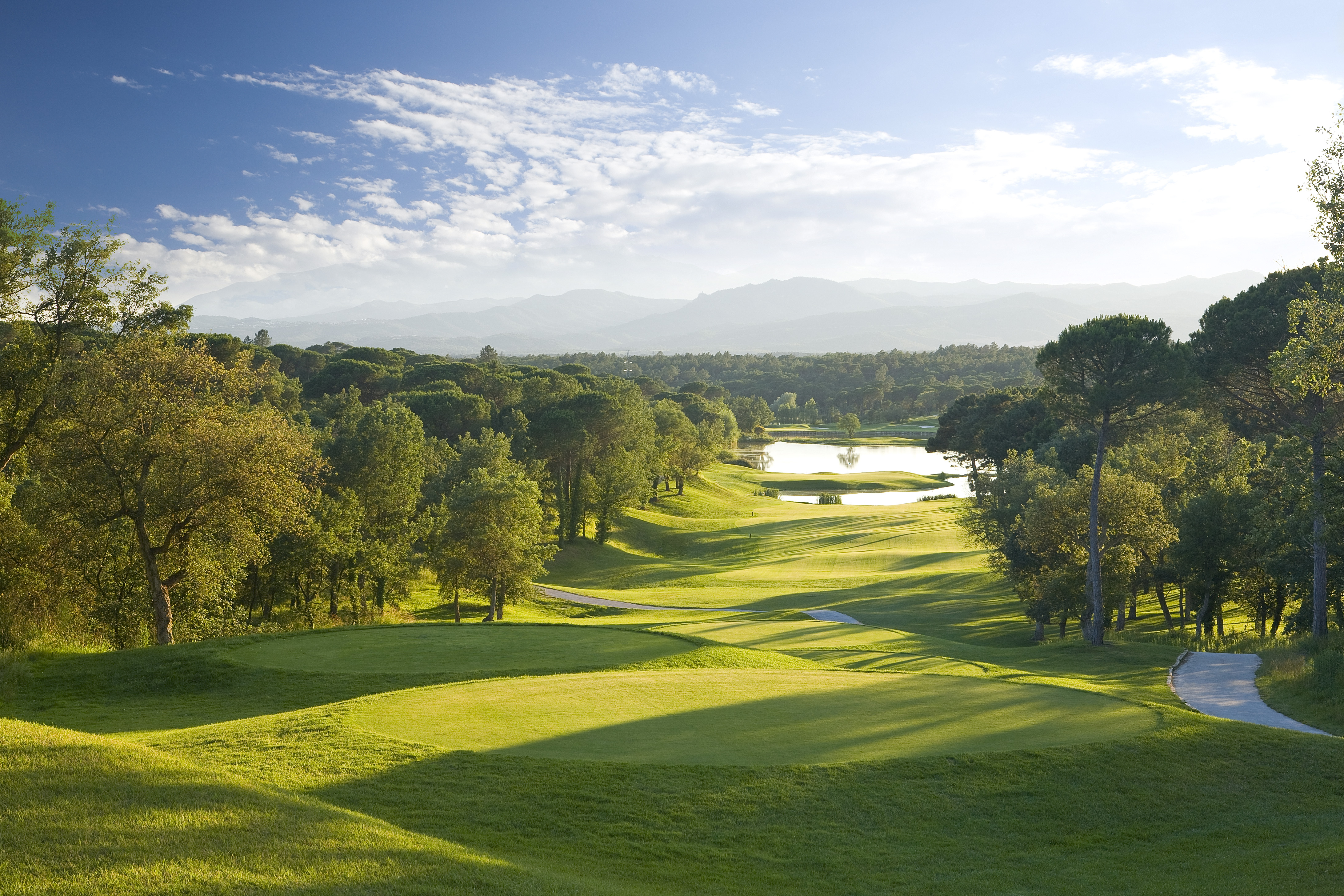
Located an hour north of the Catalan capital Barcelona, on the outskirts of Girona, PGA Catalunya is this week hosting the six-round qualifying examination for the sixth consecutive year after first opening its doors to the marathon contest in 2008.
Recently named the eighth European Tour Destination in The European Tour’s portfolio of world-class golfing venues, PGA Catalunya has also previously hosted the Open de España on two occasions while its two superb championship courses – the lengthy Stadium and its equally-challenging sister Tour Course – have received many plaudits since the resort was inaugurated in 1999.
The renowned Stadium – the older of the two layouts by six years – was recently voted 88th best course in the world, third finest in Europe and first in the golfing mecca that is Spain. High praise indeed, then, and why not?
<strong>Overview</strong><br />Designed by Ryder Cup star Neil Coles and Spanish golf legend Angel Gallardo, the resort nestles in the foothills of the dramatic Pyrenees mountain range while the superbly-manicured, rolling fairways are framed by lush pines and mature native woodland.
With water coming into play across much of the two courses, plus magnificent views afforded by multiple elevation changes, PGA Catalunya’s beauty certainly belies the beastly challenge ahead for the 156 Qualifying School hopefuls this week.
The Stadium course is the longer of the two at 7,333-yard par 72, but the shorter par 70 Tour Course – at 6,610 yards – is not to be underestimated either.
<strong>History</strong><br />PGA Catalunya, and the land on which it is built, has a storied sporting history, as co-designer Gallardo remembered.
“The land only cost around €1million, it was very cheap,” said the Spaniard. “The beginning of the story is this land was bought by the RACC (the Reial Automobile Club de Catalunya) to build a Formula One track.
“The design for the track was already under way when we were trying to find some land to make a golf course and somebody from the RACC club came to me and said ‘Angel we have a very big piece of land – 220 hectares!’
“I decided to come here and when we saw the site we knew we had to buy. I remember making the joke, ‘I think even Stevie Wonder could build a golf course here!’
“The Stadium course alone is 70 hectares. It is a massive piece of land and that is because when we bought it we were hoping to host The Ryder Cup (which was eventually held at Valderrama in 1997).
“I remember sitting on top of the hill – where the 13th tee is now – with fellow designers Neil (Coles) and David (Williams) and I think I fell in love. I said, ‘I think we can build something fantastic here’ – and they agreed.”
<strong>Facilities</strong><br />The field will this week be afforded every chance to keep their game in tip-top shape, however, with the use of a superb driving range and a vast 2,000 square metre putting green and chipping area, while four different types of grass are used on the practice greens and five bunkers – each containing a different type of sand – replicate the traps of some of the world’s most iconic golf layouts.
Last year also saw the opening of the world’s first Sergio Garcia Junior Academy which focuses on nurturing young golfing talent for the future and introducing the sport to children with physical and learning difficulties through its “Golf Adapted” programme.
<strong>Key hole</strong>
<strong>The iconic 425-yard par four 13th</strong><br />Probably the most photographed hole at PGA Catalunya with its elevated tee box, watery perils and striking Pyrenees backdrop, the downhill par four 13th hole on the Stadium course is clearly a favourite for Gallardo.
“It’s a nice hole,” he continued. “It’s not long, you can hit a three wood, two or one iron. The green is so difficult, you could put a wedge on the right side of the green and you can pitch one yard from the hole or you could finish in the water. Sometimes it depends on the flight.
“The green is more or less the same shape as the mountains in the distance. That is what I like, it’s all very natural.
“If you come here at six in the morning in summer and you see all the shadows on the fairway. In the summer time at two o’clock there’s no shadow and it looks completely different. In the afternoon when the sun moves again the shadows go the other way.
“The higher you are, the more difficult the hole becomes and the lower you go the easier the hole plays.
“If you put the flag a little bit over to the right, if you pitch over there you go into the water, it’s a fantastic hole and a fantastic green.
“It is a short hole but with incredible views. You only need to use your brain a little bit; this land was born to be a golf course.”

