

How to make the Top 15 on the Challenge Tour
By
<em>As preparations for the new Challenge Tour campaign build to a head, challengetour.com's Nick Totten took a look at a few key statistics in the first of a three-part series that should shine a light on what it will take for this year’s incumbents to make it into the all hallowed top 15 on the Rankings come season’s end.</em>
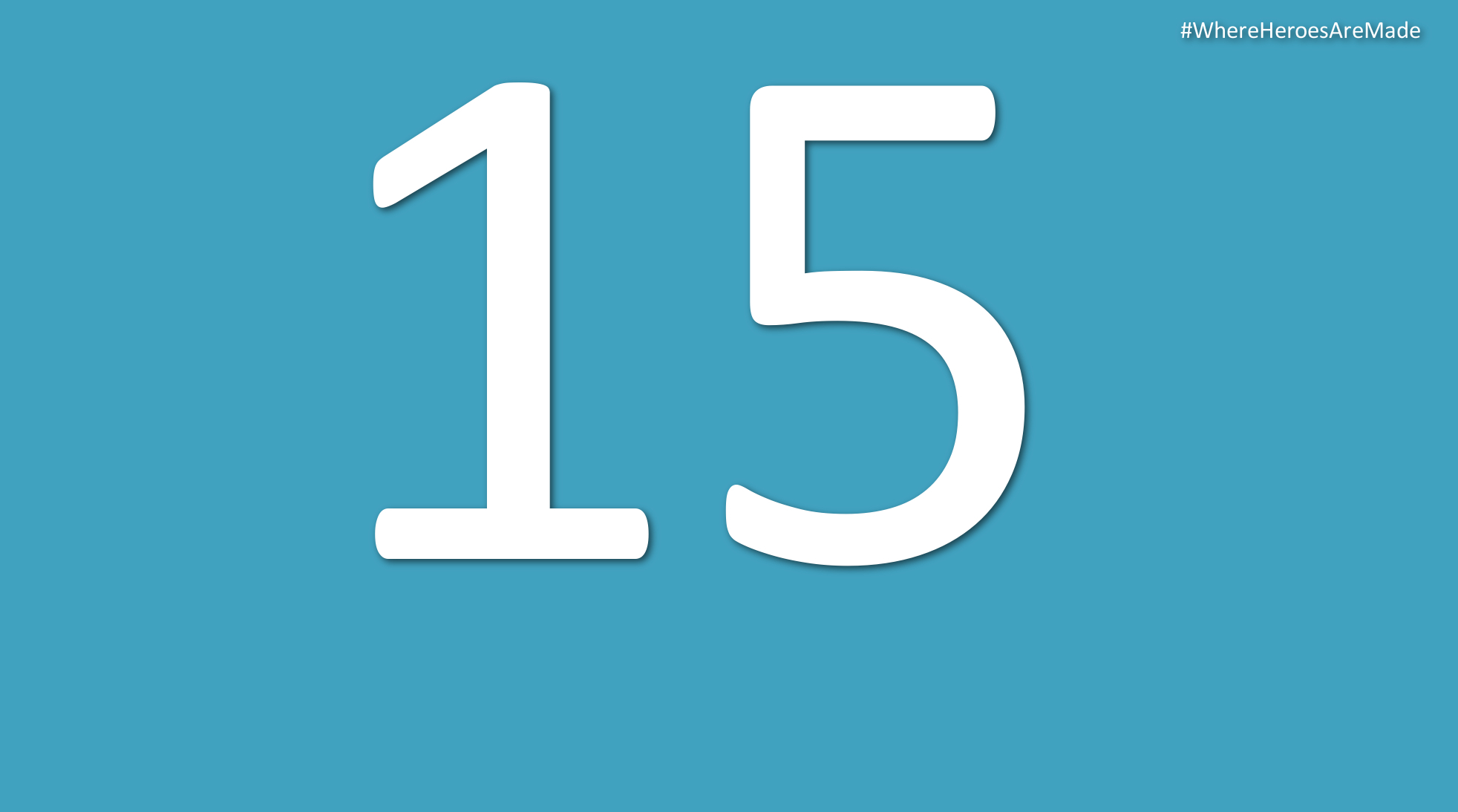
Last year was the latest in a long line of stellar Challenge Tour terms, in which the golf on display from the graduating class of 2015 was exemplary – a fact that is borne out by the numbers when you dig a little deeper into the statistics on offer.
To start with, let’s cast our net a little wider, before drilling down into a few more individual achievements.
<strong><span style="text-decoration: underline;">Overall</span></strong>
On average, to make the top 15 on the season-long list, you had to<strong>tee it up on 19 occasions</strong>and could afford to only<strong>miss the cut four times</strong>at an<strong>average of 75 percent</strong>. From those starts, you would be expected to finish in the top ten<strong>at least a third</strong>of the time – winning at least once, and rounding out the other two steps on the podium a minimum of twice.
It goes without saying that to achieve those results you need to score low, and that is exactly what the players did en route to a<strong>season-long average of 70.39</strong>for each round they played, finishing 37th and<strong>earning €119,066</strong>at a rate of<strong>€6,137 per tournament</strong>.
Last season’s class of 2015 was also multicultural in the extreme, made up of<strong>eight nationalities</strong>, of which England and France were the most represented at four. As part of that, Byeong-hun An not only became the<strong>first Korean to win on the Challenge Tour</strong>when he took the title at the prestigious Rolex Trophy, he also earned the honour of being the first from his nation to qualify through the second tier.
<strong><span style="text-decoration: underline;">Individual Honours</span></strong>
As you look a little deeper into those broader figures, some high achievers jump out, the first of which being<strong>three-time winners</strong>Benjamin Hebert and Moritz Lampert, the latter of which earned the most money per event last season,<strong>banking €12,472</strong>in each of the 12 events he played.
That saw the impressive German narrowly pip Rankings winner Andrew Johnston in that category, although the Englishman was one of the most consistent in 2014, finishing in the<strong>top ten 56 per cent</strong>of the time. When it comes to consistency though, it is hard to beat Edouard Espana, who teed it up<strong>23 times and missed just one cut</strong>, at a four round percentage of<strong>96 per cent</strong>.
The Frenchman also finished higher, more often, than any other player en route to an<strong>average position</strong>for the season of<strong>21st place</strong>, so while he missed out on a maiden Challenge Tour title last year, his<strong>six finishes between fourth and tenth</strong>place assured him of 11th spot on the Rankings.
When it came to podium finishes though, there were few more impressive than Florian Fritsch and Mark Tullo, the former finishing<strong>runner up on three occasions</strong>– twice as the result of a play-off – while the latter was third just as many times.
Unfortunate not to win at least once last campaign, Fritsch was able to put himself in such lofty positions on the leaderboard thanks to the<strong>best scoring average on the circuit</strong>, as one of only three men to average under 70. His impressive<strong>four round median of 69.13</strong>saw him edge France’s Michael Lorenzo-Vera (69.54) and top dog Johnston (69.64) en route to 12th place on the Rankings.
<strong><span style="text-decoration: underline;">Close, but no cigar</span></strong>
In order to emphasise the narrow margins at play come the end of any Challenge Tour season, here are just a few instances of how any aspiring professional can come within a whisker of realising their Race to Dubai ambitions, only to be denied.
For example, Antonio Hortal – who finished in the dreaded 16th on the Rankings – had the<strong>eighth best scoring average</strong>on the Challenge Tour, yet the Spaniard was unable to earn his graduation at the first time of asking. He was also<strong>12th in cuts made</strong>percentage and<strong>tenth in average position</strong>, but was<strong>only 17th in earnings per event</strong>, and perhaps most importantly,<strong>just 25th in top ten percentage</strong>.
So while Hortal had a very successful year,<strong>winning a maiden title</strong>at the Challenge de Madrid, he was unable to quite push over the line and earn graduation due to the strength in depth of European golf's second tier.
It was much the same for Frenchman Cyril Bouniol who ranked<strong>sixth in top ten percentage</strong>, however, many of those were between fourth and tenth, which meant he only amassed<strong>€3,333 per event</strong>. That placed him<strong>24th in that particular category</strong>, and is one of the main reasons why he was unable to finish higher than 19th on the overall Rankings.
Proof, therefore, that the calibre of player on the Challenge Tour is<strong>higher </strong><strong>than ever</strong>, and with 2015 set to get underway this month at the Madeira Islands Open – Portugal – BPI, it remains to be seen which 15 players will be celebrating promotion come the Grand Final.

